The Story of the PIP Scandal Chapter 4

“When I started PIP, I brought this formula that I kept,” Mas told police. “Why change it?”
As told by Reuters in a special report in 2012 with additional contributions as credited
Chapter Four
Mas “launched PIP, as a breast implant scandal involving Dow Corning was sweeping across the United States. The American firm was found to have knowingly concealed safety concerns about its implants, and in 1992, the U.S. Food and Drug Administration FDA called for a moratorium on breast implants. Four years into PIP’s life, in 1995, France also banned silicone in breast implants, a ban that ended in 2001.


During the USA and French silicone moratoriums PIP was still producing its implants: a polyurethane foam coated silicone casing filled with a saline solution was still available in the USA, where PIP reportedly had 40% of the market. And Mas was still developing markets in countries like the UK, Australia and South America for its silicone cocktail implants. PA
In 2001 “France lifted its ban on silicone implants, and the United States slowly began to approve more versions containing silicone gel, for which Mas already had a formula. “When I started PIP I brought this formula that I had kept,” he told police. “Why change it?””
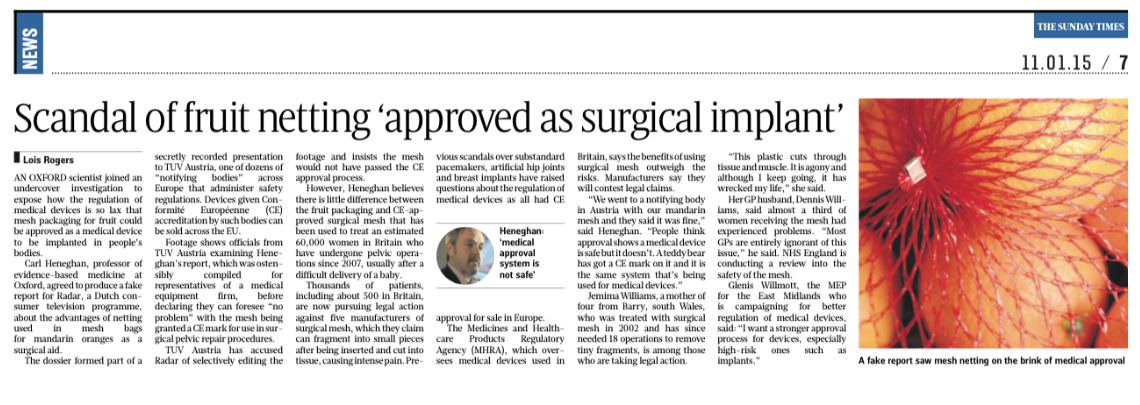
Why would a salesman without a scientific background change a formula for silicone implants he had kept? Mas didn’t have to. Getting a toxic and carcinogenic, polyurethane foam coated silicone implant through the regulatory process in Europe or sealed with a CE Mark, couldn’t be easier. In 2015, a team of European journalists and experts exposed the European Regulatory system with a scam to find out if it were still possible to bring an unsafe and ineffective potentially dangerous product to the market with the CE Mark seal of approval. It still is. Scandal of fruit netting ‘approved as surgical implant’ 2015 PA