MHRA CRAP

MHRA CRAP Captured Regulatory Authority Procedure
Examples of MHRA CRAP
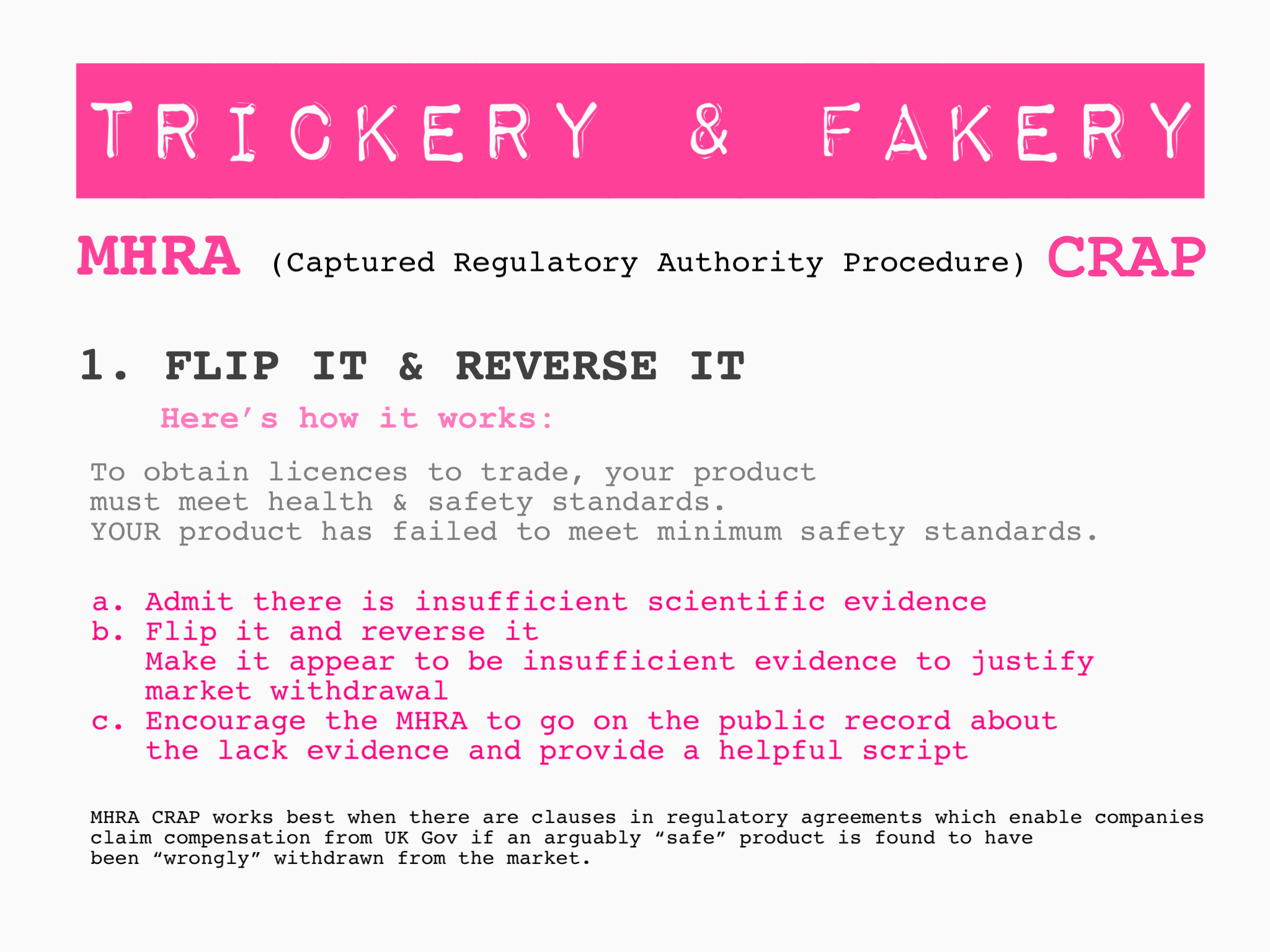
The Flip It & Reverse It
December is the best time to bury bad news
By December 2020 news of the global ban on dangerous Allergan Implants reaches the UK. This is a double whammy for PIP victims who were helped to replace their “faulty” PIP implants with the “good” and “highly recommended” Allergan Natrelle implants. From the PIP scandal in 2012 onwards there was an aesthetic surgery bonanza in the UK. It seems that even bad news for women with implants can have a positive effect on industry profits.
The tabloid press take “titbait” very seriously and like to keep abreast of any “exploding” breast scoops.
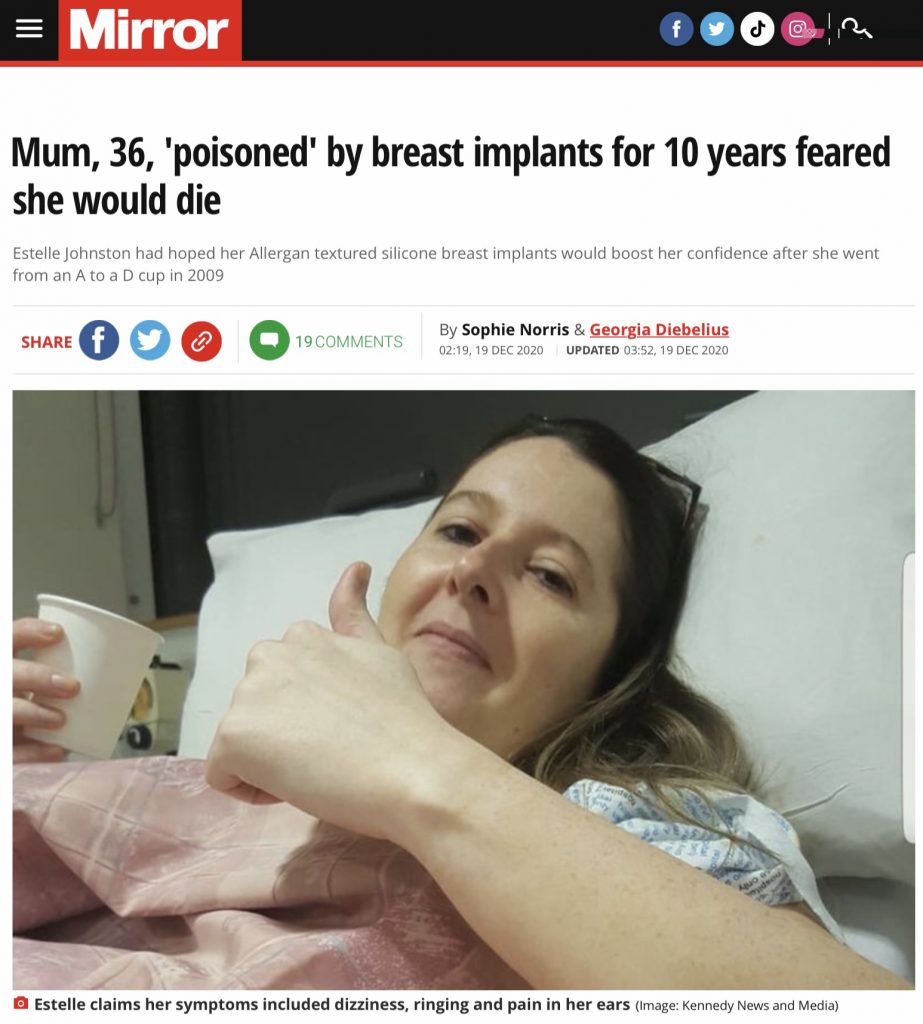
ATTRACTING ATTENTION
All tabloid TITbait attracts public comments. The tabloids keep the comments “switched on“. This guarantees Estelle‘s health issues will be trivialised and she will receive a lot of personal criticism. This is an industry tactic employed to manage women’s health and rights issues: this is called VICTIM BLAMING. Negative public opinion about women with breast implants makes it easier for government, doctors and hospitals to turn women away from NHS medical treatment when they get sick from their implants. This results in large numbers of women returning to an aesthestic clinic for medical help, advice and treatment. This provides additional financial benefits for the private clinics and obstructs women from NHS care.
In the Mirror’s article, the UK’s health and safety medicines and medical devices regulator MHRA is quoted. Here we see a clear example of MHRA CRAP (Captured Regulatory Authority Procedure) using Victim Blaming together with the Flip it & Reverse It.
First, we see a clinic with a tarnished reputation for dealing with PIP victims, Transform, making it clear they were on the Allergan case much earlier in 2018. The clinic confirms that Allergan has determined its okay to leave their implants in the body (just like PIP). Transform & MHRA CRAP repeats Allergan’s message, redirects sick and frightened women back to the clinic and redirects the responsibility for the implants back to the patient.
Victim blaming or “victim responsibility” is also used in Germany to block German women from medical care and treatment. This is a legal process used to obstruct care where you yourself have been involved in the decision making: here’s an example:
You are injured while driving your motorcycle
There is a “fault” with the tyres
You cant get an ambulance to pick you up or get help or treatment from a NHS hospital
You made the decision to buy and drive the bike
There are known risks for motorcycle riders
It is your responsibility to check the tyres
You visit a doctor about your injuries.
Your doctor suspects buying the motorbike is symptomatic of a middle-aged crisis
You go back to the motorcycle dealer, ask for help
The dealer offers you a good, “money saving” deal on a ’safer’ motorbike and a quick turn around on the date for delivery.
TRICKERY & FAKERY
In the December 2020 TITbait Mirror article, the FLIP IT & REVERSE IT is used in conjunction with Victim Blaming. INSUFFICIENT SCIENTIFIC EVIDENCE is interchanged with “independent clinical analysis”. Historic Patients are women who are already implanted with cancer-causing Allergan implants.
A spokesperson for Transform Hospital Group said: “Allergan began a recall of implants already issued to distributors and healthcare providers in December 2018. Importantly, and based on independent clinical analysis, the Allergan recall did not advise providers that historic patients’ implants should be removed.
“In addition, the UK regulator responsible for breast implant safety – the Medicines and Healthcare Products Regulatory Agency (MHRA) – does not advise that patients with Allergan breast implants should seek to have the implants removed.
“Specifically, the MHRA says ‘There is currently no evidence of an increased risk to patients and there is no need for people who have Allergan breast implants to get them removed or have any additional clinical follow-up.’
“All patients are fully informed of the potential risks of surgery generally, and specific to their procedure, as part of their consent process before undergoing surgery.”